


Posted on
How to Finance a Painting Franchise: Funding Options to Evaluate
Explore common ways qualified buyers may finance a painting franchise, plus the questions to ask about fees, working capital, approval, and risk.
Quick Answer
Qualified buyers may use a combination of personal capital and third-party financing to fund a painting franchise. Possible paths can include an SBA-backed loan through a participating lender, conventional financing, a specialized retirement rollover structure, or financing for a portion of the franchise fee when approved. Veteran candidates may also find education, connections, or incentives through programs such as VetFran.
CertaPro Painters does not currently offer direct financing. Approval, terms, and permitted uses depend on the lender or program, the buyer’s qualifications, and current requirements. This article provides general educational information, not financial, legal, or tax advice.
Start With the Full Investment, Not Only the Franchise Fee
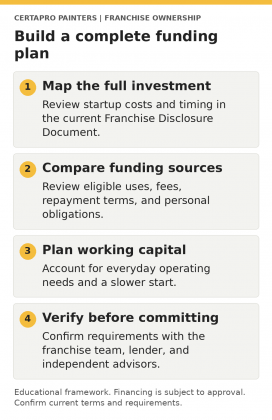
The franchise fee is one part of the cost to open a business. A complete funding plan also needs to account for training and travel, equipment, insurance, professional services, technology, local marketing, vehicles when applicable, and the working capital required to support the business before cash flow becomes more predictable.
That is why a financing conversation should begin with the total expected investment rather than one line item. Review the current CertaPro Painters Investment page and the Franchise Disclosure Document for the latest cost categories and ranges. Do not rely on an older article or a general estimate when making a financial decision.
It is also important to separate the amount you can borrow from the amount you should borrow. A larger loan may preserve cash at opening, but it also creates debt payments and may increase the pressure on early cash flow. The right structure depends on the buyer’s finances, risk tolerance, business plan, and professional advice.
Common Painting Franchise Financing Options
There is no single funding structure that works for every buyer. Most options involve different tradeoffs in cost, speed, eligibility, risk, and control.
Personal Capital
Many buyers use personal savings or other liquid assets for some portion of the investment. Personal capital can reduce the amount that needs to be financed and may demonstrate that the buyer has a meaningful financial commitment to the business.
The tradeoff is liquidity. Using too much cash at opening can leave the owner with less flexibility for working capital, unexpected expenses, or personal needs. Buyers should think beyond the opening date and keep an appropriate reserve based on their circumstances.
SBA-Backed Loans
The U.S. Small Business Administration does not typically make 7(a) loans directly to business owners. Instead, participating lenders make the loans, and the SBA guarantees a portion when the borrower and transaction meet program requirements.
An SBA-backed loan may be used for eligible business purposes such as a change of ownership, working capital, equipment, supplies, or other approved costs. The lender reviews the borrower’s credit, liquidity, experience, collateral when applicable, business plan, and ability to repay.
Being a franchise does not guarantee SBA eligibility or approval. Lenders may use the SBA Franchise Directory as part of their review, but inclusion is not a recommendation of the brand or an approval of an individual borrower. Terms and requirements can change, so buyers should confirm current details with an SBA-participating lender.
Conventional Business Financing
Banks, credit unions, and other lenders may offer conventional business loans or lines of credit. These products are not backed by the SBA and may have different requirements for down payment, collateral, credit history, time in business, or repayment.
Conventional financing can be worth comparing when a buyer has strong qualifications or an existing banking relationship. The best comparison looks at more than the interest rate. Fees, loan term, payment schedule, collateral, prepayment terms, personal guarantees, and working-capital access can all affect the real cost and risk.
Retirement Rollover Structures
A Rollover for Business Startups, commonly called a ROBS arrangement, may allow a qualified individual to use certain retirement funds to invest in a new business without treating the transaction as a standard early withdrawal. It is a specialized structure involving a corporation and a qualified retirement plan.
This is not a simple transfer, and it is not right for every buyer. The IRS has identified compliance concerns connected with some ROBS arrangements. Mistakes can create serious tax and retirement-plan consequences. Anyone considering this option should work with experienced legal, tax, and retirement-plan professionals who can explain setup, ongoing administration, fees, and risk.
Financing a Portion of the Franchise Fee
CertaPro Painters states that qualified candidates may be eligible to finance a portion of the franchise fee, subject to approval. This is not the same as direct financing for the full business investment.
Buyers should confirm the current amount that may be financed, the provider, eligibility standards, repayment terms, fees, timing, and whether the option can be combined with another loan. They should also make sure the rest of the startup and working-capital plan is fully funded.
Veteran Resources and Incentives
Veterans may be eligible for education, franchise connections, or current incentives through the International Franchise Association’s VetFran program and participating brands. These resources can help a candidate understand franchise ownership and identify opportunities that value military leadership experience.
VetFran participation does not guarantee a loan or replace lender underwriting. A veteran buyer should verify current CertaPro Painters incentives and compare financing through the same careful process as any other candidate. Visit the CertaPro Painters Veteran Franchise page for current information.
What Can Franchise Financing Cover?
Eligible uses vary by lender and program. Depending on the financing structure, funds may cover some combination of the franchise fee, equipment, initial marketing, technology, professional fees, training-related costs, vehicles, supplies, or working capital.
Some expenses may be excluded, limited, or require separate documentation. Loan proceeds also may not be available at the exact time every payment is due. Buyers should create a detailed sources-and-uses plan that shows where each dollar will come from, what it will pay for, and when it needs to be available.
A lender, financial advisor, and the Franchise Development team can help clarify different parts of that plan. Their roles are not interchangeable: the franchisor explains the franchise requirements, the lender decides whether to approve financing, and the buyer’s legal and financial professionals advise the buyer.
Why Working Capital Deserves Its Own Plan
Working capital is the cash available to cover everyday operating needs. It may support payroll or contractor payments, insurance, local marketing, software, fuel, materials, loan payments, and other expenses while the business builds a customer base.
Running short of working capital can force an owner to make rushed decisions at the exact time the business needs consistent execution. A funding plan should include a reasonable reserve and test how long that reserve may need to last under conservative assumptions.
Read How Much Working Capital Do You Need Beyond the Franchise Fee? for a deeper review of this part of the investment.
What Will a Lender or Advisor Review?
Requirements vary, but buyers should expect a detailed review of their financial position and plan. Common areas include:
- Personal credit history and existing debt
- Available cash and other liquid assets
- Net worth and collateral when applicable
- Relevant management or business experience
- The proposed ownership structure
- A business plan and financial projections
- The franchise agreement and Franchise Disclosure Document
- Expected sources and uses of funds
- Working-capital assumptions and repayment ability
Projections should be grounded and clearly labeled as estimates. A lender may test the plan against slower sales, higher expenses, or other changes. That review can be useful to the buyer as well, because it shows where the plan has room and where it may be exposed.
Questions to Ask Before Choosing a Financing Structure
- How much personal cash must I contribute?
- Which startup and operating costs are eligible?
- When will funds become available?
- What are the interest rate, fees, term, and monthly payment?
- Is the rate fixed or variable?
- Is collateral required?
- Will I sign a personal guarantee?
- Are there prepayment penalties or other restrictions?
- How much liquidity will remain after closing?
- Does the plan leave enough working capital for a slower start?
- What ongoing reporting or retirement-plan administration is required?
- How would the structure affect my personal finances if the business underperforms?
Put competing options side by side and compare the full obligation, not just the amount approved. A lower payment may come with a longer term and higher total cost. A faster option may carry higher fees or greater personal risk.
When Financing Fits Into the Franchise Process
Financing research can begin early, but final underwriting usually requires detailed documents. As you learn about the opportunity, organize personal financial records, review the investment requirements, and speak with qualified lenders or advisors.
The Franchise Disclosure Document is a central part of that review. It provides information about the franchisor, fees, estimated initial investment, contract terms, and other required disclosures. Read How to Read a Franchise Disclosure Document before relying on individual numbers or assumptions.
The CertaPro Painters franchise process gives candidates an opportunity to learn about the business while both sides evaluate fit. Financing should support a well-informed decision, not rush it.
Frequently Asked Questions
Does CertaPro Painters offer direct financing?
No. CertaPro Painters does not currently offer direct financing. Qualified candidates may be eligible to finance a portion of the franchise fee, subject to approval. Confirm current terms during the franchise process.
Can I use an SBA-backed loan to buy a painting franchise?
Possibly. SBA-participating lenders may finance eligible franchise transactions, but the borrower, lender, brand, and use of funds must meet current program requirements. Approval is not guaranteed.
Can I use retirement funds to invest in a franchise?
A qualified ROBS arrangement may allow certain retirement funds to be invested in a business, but it is complex and carries compliance risk. Consult experienced legal, tax, and retirement-plan professionals before taking action.
Do I need working capital beyond the franchise fee?
Yes. A complete plan should account for startup costs and the cash needed to operate while the business develops. The appropriate amount depends on the market, financing structure, expenses, and business plan.
Are there financing resources for veterans?
Veterans can explore education, connections, and possible incentives through VetFran and participating brands. These resources do not guarantee lender approval, and current offers should be verified directly.
Review the Investment and Your Funding Plan
The best financing structure is one you understand and can support under realistic assumptions. Review the current CertaPro Painters investment information, study the Franchise Disclosure Document, and speak with qualified lenders and independent legal, tax, and financial advisors before making a commitment.
This article is for general educational purposes only and is not financial, legal, tax, or lending advice. Programs, eligibility rules, incentives, and terms can change. Financing is subject to approval by the applicable lender or provider.